How exactly can intact German Shepherd dogs be managed? This post will cover managing one or more intact dogs, with a focus specifically on German Shepherds.
Much information can be found on the internet about managing dogs that are intact, and you’ll find debates about whether you should spay or neuter. When searching, keep in mind that German Shepherds are large, strong dogs, and some bloodlines of German Shepherds are more aggressive than others. German Shepherds are definitely more territorial than some other breeds, such as the hound breeds, which were bred to run in packs of both genders. Be mindful of this when comparing ideas of how to manage dogs or whether or not to spay or neuter.
In this post, you’ll find specific examples of how I personally manage my own German Shepherds.
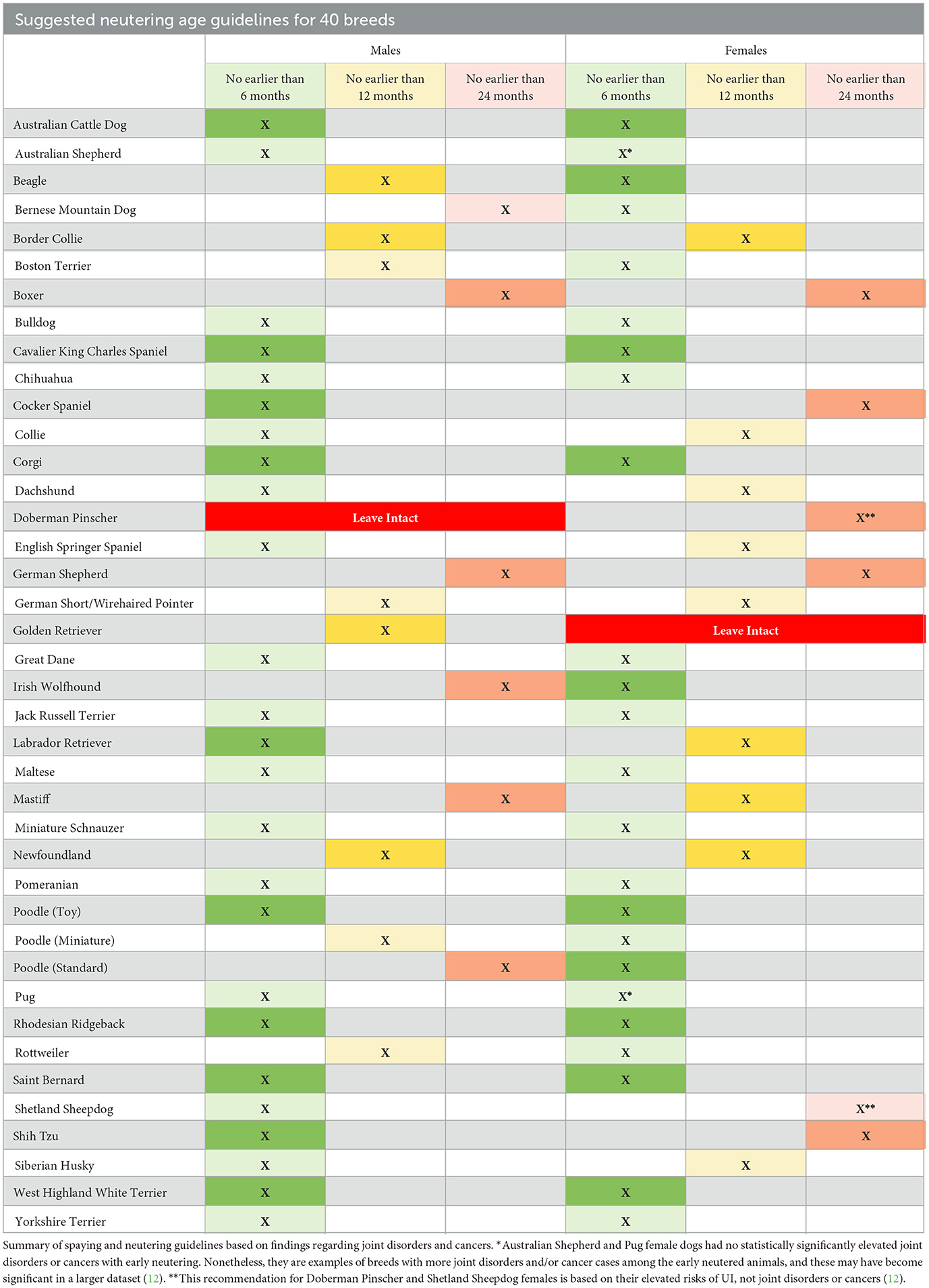
First of all, I am referencing again this important study about why you should wait until after 2 years of age to spay or neuter your German shepherd:
https://www.ucdavis.edu/health/news/when-should-you-neuter-or-spay-your-dog
Because of this scientific evidence, I encourage my very well selected and responsible pet puppy buyers to spay or neuter their dogs after age 2.
Here are my opinions about spaying and neutering and information on how I manage my own intact GSDs when I am not planning to breed:
I have a two story house with a walkout basement. All my dogs live inside my house. I have no kennel runs or outdoor buildings for dogs. I am able to keep any female in heat upstairs away from the males downstairs. The female in heat goes into a separate smaller side yard to do her business so it doesn’t drive the males as crazy. The males can smell her, but she has zero physical contact and does not enter any space the males use for the entire 28 days she is in season.
I then thoroughly bathe the female to remove any traces of scent on her before she is released back in with the males. If there is any indication that the males still find her attractive, I remove her for another week, and she gets another bath. During the heat cycle, to protect my hardwood floors and area rugs upstairs, I put cardboard down (I save boxes) so that the blood doesn’t get everywhere. The female will sleep in a crate by my bed so she doesn’t feel isolated.
I have three intact male adult dogs. Two of them get along well enough that I can leave them outdoors to run and relieve themselves together. I do not put them in small spaces together where they could posture or fight over toys. The male who is 3 years old (Clyde) was raised with the male who is 5 years old (Winston). Even though Clyde is now fully mature and larger than Winston, Winston maintains his Alpha status. Both males regularly go out with a 3 year old intact female, See See. She is separated from them when she goes into heat, and I have no intention of breeding her to either of them because both are her brothers.
In this video, you can see them come inside from the yard, tails wagging. Adult intact male German Shepherds do not often get along this well, so I’m not suggesting that this behavior is typical.
My oldest male dog, Johnny, is kept with his littermate sister, Jane, who is spayed. He adores her! He does not like any other males. I am very careful to keep him away from the other two. Even though he is on the same floor as the other males, there are always two doors separating them.

Of course, not everyone has such a great setup. The main thing is to keep in-heat-females and their urine as far away as possible from the males so the males don’t go crazy and become destructive. Obviously, there should be no physical contact at all, even if restrained on leash, because this would be very frustrating for both the male and female. The instinct to breed at the peak of the female’s ovulation cycle is extremely strong for both the female and male. And yes, I have heard stories of dogs mating through chain link fencing. For this reason, I do not have any shared fence lines.
Females from my bloodline usually come into their first season around 7 to 10 months of age. Remember that the female will shed out about 3 to 6 weeks before she goes into heat. As I write this, See See has started a shed cycle, so she will be out of coat for the dog show later this month (not a good thing), and I will be watching for signs that she has started her heat cycle.
In this video, you can see loose hair on See See’s flanks, but Clyde’s coat looks great. She and Clyde are kept together, eat the same food, and, as littermates, are exactly the same age with the same genetics. The shed cycle is not based on weather in females. It is hormone based.
When I know my females are ready to come in season, I use a tissue and wipe just to check for blood every day. Tip: Write down the date that blood is first observed! This is important when determining how long to keep a female away from other dogs and also to predict when she will have her next cycle, usually about 6 months later.
When I see blood, females are moved away from the males for at least 28 days. Occasionally, a female will have a split heat. This means she’ll start bleeding for a few days and then stop for a week or so, and then start bleeding again. This extends the heat cycle.
It’s important to be very observant so that you don’t miscalculate the cycle and allow your female to be around an intact male dog when she is still fertile.
This next part is very important:
The cycle is not over when the bleeding stops. The blood will turn to a lighter amber colored fluid. This is when the female is at her PEAK of attractiveness and fertility. Some dogs will lick themselves a lot and not have much fluid to check. Even after the fluid stops, she will still be attractive and possibly fertile for another couple of weeks.
Also, females can have what is called a silent heat. This is when there are no overt signs of a heat cycle, but she is still attractive to males and fertile. So even if you don’t see any signs of a typical heat cycle, if males are going crazy over her, by all means, keep her separate. They will know better than you do because they can smell things that we cannot. She could also have an infection which is causing a discharge. If you are not sure, take her to a vet for an exam.
If you have a pet female German Shepherd that you got as a puppy, you will probably have to go through the routine of keeping her away from other dogs through three heat cycles before you get her spayed at age 2. By that time, managing her contact with other dogs and keeping your house clean without isolating her can seem difficult.
If you have a male intact dog around female dogs who are in heat, you will notice he goes completely bonkers. (That’s a technical term!) He will forget his obedience commands, he will lunge, he will chew things up, scratch at doorways incessantly, stop eating, and maybe even hump things.
The best way to control this extra energy is to make him tired. Play fetch, go running, go swimming, turn him out with another dog that can tire him out. This will reduce his anxiety, and he will sleep and eat better. Once a male German Shepherd is neutered after 2 years old, his fascination with females in heat will almost certainly stop, and this is a big relief to most pet owners.
Another thing to consider with a male is that he may know of a female in heat nearby because he can smell her, and you don’t even know she exists. So, if your male dog is acting crazy, this might be the reason.
Do you have to neuter a pet GSD at age 2? Here are some of my thoughts based on experience with my German Shepherds.
Female considerations: Pros and Cons
Spaying female dogs removes the possibility of pyometra, a life-threatening infection of the uterus. Continually having cycles without breeding increases the likelihood of pyometra.
Spaying female dogs reduces the likelihood of cancerous mammary tumors as the female ages.
Spaying female dogs eliminates the possibility of an unwanted litter of puppies. Let’s say you’ve done a great job managing your female dog, but what if something happens and you are not available to manage the situation (such as you are sick or on vacation)? If your dog is bred and has puppies that are unplanned, this can be a disaster. It’s very hard to place puppies when you are not an established breeder. It’s doubly hard to make sure the homes are good.
Spaying female German Shepherds earlier than 2 years of age increases the likelihood of bladder incontinence later in life.
Spaying female German Shepherds earlier than 2 years of age increases the likelihood of hip dysplasia and other bone development problems.
Spaying female dogs is a surgical risk. It is major abdominal surgery using a general anesthetic, although most dogs recover very quickly.
Female dogs must remain intact in order to be shown in AKC conformation shows.
Male considerations: Pros and Cons
Neutering male dogs almost always eliminates the frustration they feel when they are not allowed to breed.
This varies from dog to dog. Only you know how frustrated your dog is acting, but only he knows why he is frustrated. He could be frustrated from being cooped up all day, not being around his favorite person, missing a favorite dog companion, wanting to chase a squirrel, inconsistent/poor training techniques, or lack of exercise.
High frustration levels due to a nearby female in heat and the urge to breed are evidenced by incessant whining, frequent mounting behaviors, marking with urine in the house, and even spontaneous ejaculations on the living room floor. (No, that’s not a leak from the ceiling.) Also, your dog may seemingly having his mind on other things when you are trying to train, or even just go for a walk, such as when he is overly smelling where a female has urinated and bracing and refusing to go along.
Additionally, many male dogs are not motivated by treats, praise, or toys when they have their mind on a nearby female in heat. It seems impossible to use positive reinforcement when the only rewarding thing they want is the female.
Neutering male dogs removes the possibility of testicular cancer.
Neutering male dogs reduces the likelihood of prostatitis.
Neutering male dogs eliminates the possibility of siring an unwanted litter of puppies. Even though the puppies might belong to someone else who owns the female, it’s your responsibility as the owner of the male to ensure that you are not allowing this to happen. Also, remember that you are not infallible. If you are sick or on vacation, someone else may not be as responsible with your intact male as you are.
Neutering male dogs earlier than 2 years of age increases the likelihood of hip dysplasia and other bone development problems.
Neutering male dogs is a surgical risk and requires a general anesthetic, although most dogs recover very quickly.
Male dogs must remain intact in order to be shown in AKC conformation shows.
You might have noticed that I have not addressed neutering as a way to control aggression in male dogs. Traditionally, this has been recommended by veterinarians as the first step in reducing territorial or inter-male aggression. Recent studies have shown that this may not be the case. Here is a link to a study that describes the inconsistencies for recommendations for neutering to reduce aggression:
https://www.frontiersin.org/journals/veterinary-science/articles/10.3389/fvets.2018.00018/full
I hope this post helps someone make a more informed decision about determining whether to obtain a puppy, or which gender to acquire, or to make an informed decision about spaying and neutering. And, I hope I have provided some useful ideas on managing intact dogs in a household.
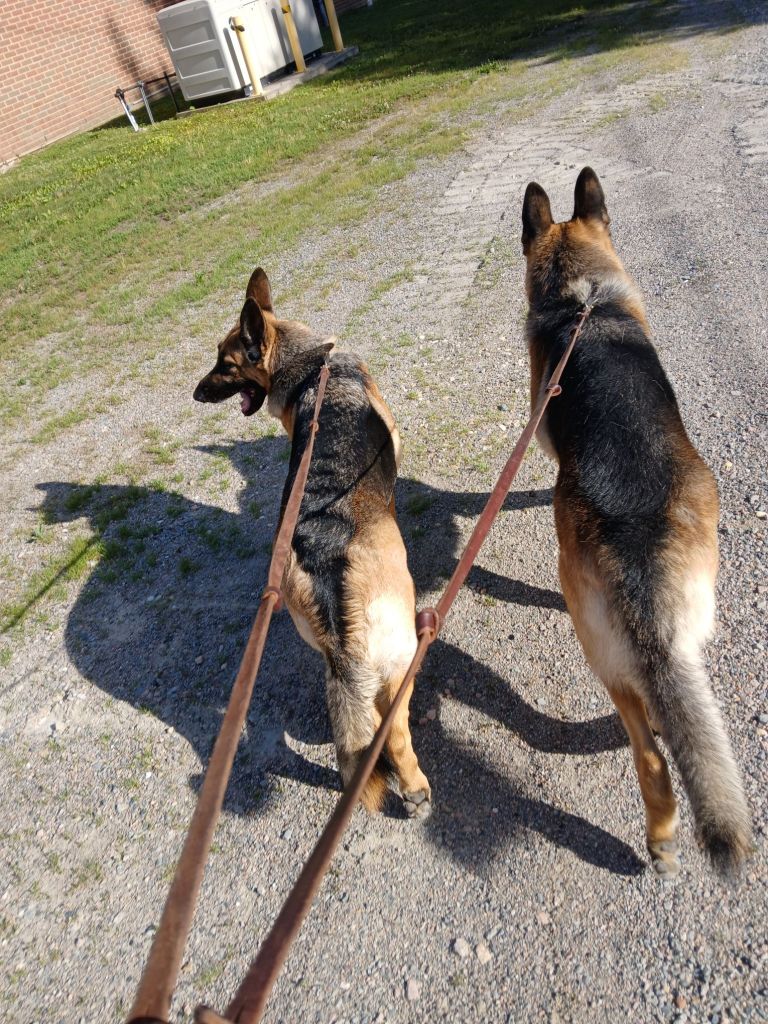
Here are my two 9 month old females, who have not had their first heat yet:
 Shepherd Sight